
Footwear manufacturing guides · 12/11/2026
Shoe Manufacturing Factory: Materials and Soles
Choose a shoe manufacturing factory by materials and construction: leather, textile, vulcanized or cold-cement soles and intended product use.
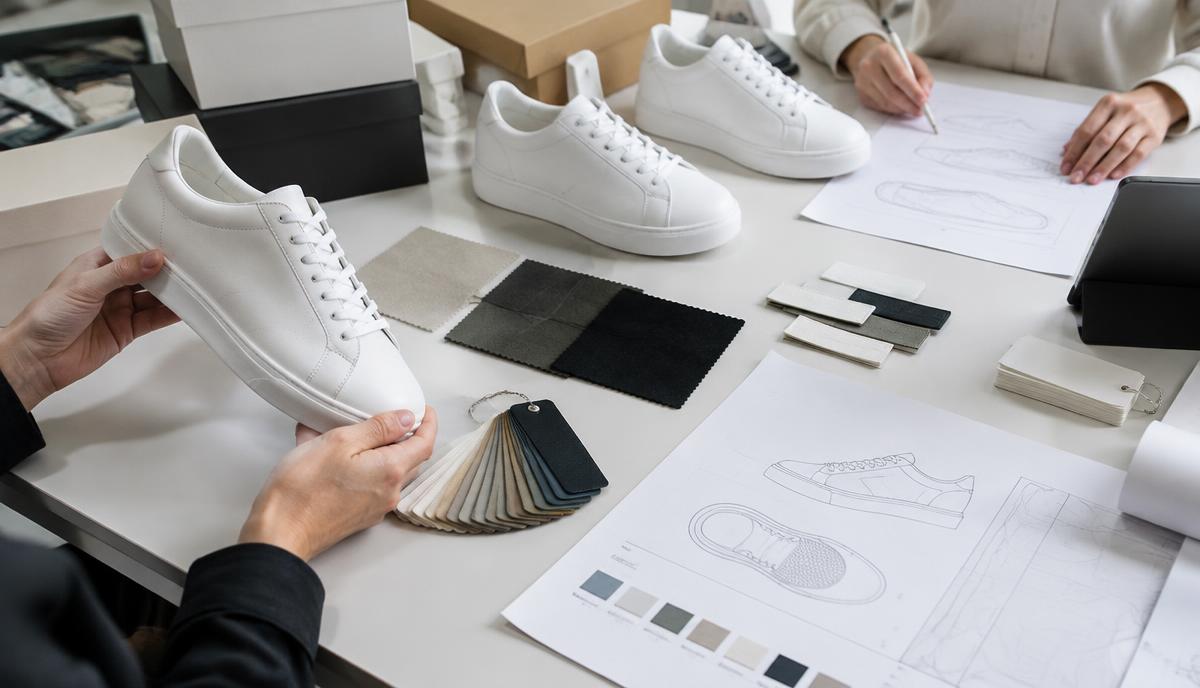
AI illustration of shoe materials and development samples
Can one footwear factory make every shoe type?
No. Factory suitability depends on construction, materials, tooling and intended use. A casual sneaker factory is not automatically a technical running-shoe producer or a specialist leather dress-shoe manufacturer. Ask for evidence relevant to your proposed shoe rather than relying on a broad footwear factories label.
Leather shoe manufacturers versus textile footwear factories
Leather, coated synthetics and textiles differ in cutting, stitching, appearance and handling requirements. Specify the material grade, thickness, finish and approved supplier where applicable. A leather-like appearance in a photograph does not prove that the upper is leather. Confirm the actual specification and any required material or chemical testing before quoting.
Vulcanized and cold-cement construction
Vulcanized footwear uses a process involving heat and a compatible rubber construction. Cold-cement footwear relies on adhesive bonding with process conditions appropriate to the selected upper and sole. These are different manufacturing routes, not a universal quality ranking. The development team must confirm material compatibility, construction and testing for the proposed style.
A sole supplier is not the same as a finished-shoe factory
Searches such as sole factory shoes may refer to component suppliers rather than complete-footwear manufacturers. Clarify who develops the outsole, supplies size sets, owns the moulds and approves fit with the last and upper. A good outsole on its own does not establish the performance of the assembled shoe. Final product evaluation remains necessary.
Casual sneakers and athletic performance claims
Athletic shoe manufacturers need to validate the product against its intended use and agreed performance requirements. A lifestyle or semi-athletic sneaker should not be marketed as certified safety footwear or a tested high-performance running shoe without evidence. State the use case and required tests early. Avoid copying another brand’s claims into a new product specification.
Match the project to Dong Hung’s capabilities
Dong Hung’s public footwear offer includes vulcanized and cold-cement casual and lifestyle footwear. Send the construction, material and use requirements for a feasibility review. Specific leather programmes, specialist performance demands and component supply arrangements need confirmation; this guide does not promise capabilities that have not been approved for your project.
Frequently asked questions
Is a sole factory also a shoe manufacturer?
Not necessarily. A sole factory may supply components only; confirm who makes and tests the complete shoe.
Does Dong Hung offer every athletic shoe category?
No universal capability is claimed. Its public offer covers vulcanized and cold-cement casual and lifestyle footwear; specialist projects require feasibility review.